When was the last time you really looked at your garage door? For most homeowners, the answer is “not until something goes wrong.” Yet this large, functional feature affects your daily life, home security, and property value more than you might realize.
Garage door professionals at Collins Overhead Door report that homeowners who upgrade to modern overhead doors often express surprise at how much difference the right door makes in their daily lives. Beyond simply moving up and down, today’s doors offer features that older models simply can’t match.
Let’s explore the ten key benefits of installing a modern overhead garage door.
1. Enhanced Home Security
Your garage door is one of the largest entry points to your home. Outdated doors with simple locks or predictable security codes leave your property vulnerable.
Modern overhead doors provide:
- Rolling security codes that change each time your remote is used
- Smartphone control to monitor who enters and when
- Vacation mode settings that disable remote access while you’re away
- Sturdy materials resistant to forced entry
- Integration with home security systems
Can you be sure your current door isn’t an easy target for thieves? Modern doors eliminate this worry with multiple layers of protection.
2. Improved Energy Efficiency
Older garage doors leak air like a sieve, forcing your heating and cooling systems to work harder.
Modern insulated doors help:
- Reduce energy bills by up to 20% for attached garages
- Maintain comfortable temperatures for workshops or fitness areas
- Prevent freezing pipes in winter months
- Create buffer zones between outdoor temperatures and living spaces
- Reduce strain on HVAC systems
With energy costs constantly rising, can you afford to ignore this hidden energy drain? Modern doors pay for themselves through years of energy savings.
3. Increased Property Value
Real estate experts consistently rate garage door replacement as one of the top home improvements for return on investment.
A new overhead door:
- Boosts curb appeal instantly
- Returns up to 94% of its cost at resale
- Makes homes sell faster in competitive markets
- Signals to buyers that the home has been well-maintained
- Eliminates buyer concerns about immediate replacement costs
Would potential buyers see your current door as an asset or a replacement project? The answer affects thousands in your home’s market value.
4. Reduced Maintenance Requirements
Traditional wooden doors demand constant upkeep to prevent warping, rotting, and paint failure.
Today’s overhead doors offer:
- Composite materials that resist weather damage
- Factory finishes that last decades without repainting
- Self-lubricating components that need minimal service
- Corrosion-resistant hardware
- Systems designed for tens of thousands of cycles without failure
How much time and money have you already spent maintaining your current door? Modern options free you from this ongoing burden.
5. Enhanced Noise Reduction
Older garage doors announce themselves to the entire neighborhood with squeaks, rattles, and the grinding of chain-drive openers.
Modern systems provide:
- Belt-drive operators that run whisper-quiet
- Vibration-isolating hardware
- Insulation that dampens sound from both directions
- Precision-balanced operation for smoother movement
- Soft-start and soft-stop technology to eliminate slamming
Does your current door wake sleeping family members when you arrive home late? New systems solve this common household friction point.
6. Smart Home Integration
Today’s garage doors connect seamlessly with the rest of your smart home ecosystem.
Advanced features include:
- Voice control through Amazon Alexa, Google Assistant, or Apple HomeKit
- Automated opening when your car approaches
- Scheduled operation for consistent security
- Real-time status updates and alerts
- Integration with lighting, climate control, and security cameras
Have you ever driven away wondering if you left the door open? Smart integration eliminates this worry forever with remote checks and automatic closing.
7. Improved Safety Features
Modern garage doors include mandatory safety features that older doors lack.
These life-saving improvements include:
- Auto-reverse sensors that prevent doors from closing on objects or people
- Motion detection that stops door movement when unexpected motion occurs
- Finger-pinch protection designs
- Emergency battery backup during power outages
- Manual release mechanisms that work reliably
What price would you put on your family’s safety? Modern doors provide peace of mind that aging systems simply cannot.
8. Weather Resistance
Extreme weather events continue to increase nationwide, putting greater demands on exterior home components.
Today’s overhead doors offer:
- Wind ratings up to 150+ mph for hurricane-prone areas
- Improved sealing against wind-driven rain
- Materials tested for extreme temperature fluctuations
- Drainage designs that prevent water damage
- UV-resistant finishes that won’t fade or deteriorate
Will your current door protect your home and possessions during the next major storm? Modern doors are built specifically for regional weather challenges.
9. Style Customization
Garage doors now come in designs that complement any architectural style.
Modern options include:
- Carriage house styles with authentic-looking hardware
- Contemporary full-view glass and aluminum
- Custom wood designs with modern operation
- Insulated steel with woodgrain textures
- Unique window configurations and decorative glass
Does your garage door enhance or detract from your home’s appearance? With today’s options, this large visual element becomes a design asset rather than an eyesore.
10. Quieter, Smoother Operation
The daily user experience of a modern door system makes older models feel truly obsolete.
Performance improvements include:
- Balanced tension systems for easy manual operation during power outages
- Smooth track designs that eliminate jerky movement
- Soft start/stop technology that reduces wear and tear
- Nylon rollers that glide silently
- Precision manufacturing that eliminates binding and sticking
How much frustration does your current door cause with its quirks and noises? Modern systems simply work, without the daily irritations.
What This Means For Your Home
Your garage door operates about 1,500 times per year. Each of those interactions should be secure, quiet, and trouble-free.
Modern overhead doors transform this basic home component from a potential problem area into a feature that enhances your daily life, protects your property, and increases your home’s value.
The combination of improved security, energy efficiency, and reduced maintenance means these doors pay dividends long after installation. Their attractive designs and smart features bring your home into the modern era.
When you consider the safety, security, and convenience benefits alongside the financial returns, upgrading your garage door becomes less of an expense and more of an investment in your property and peace of mind.
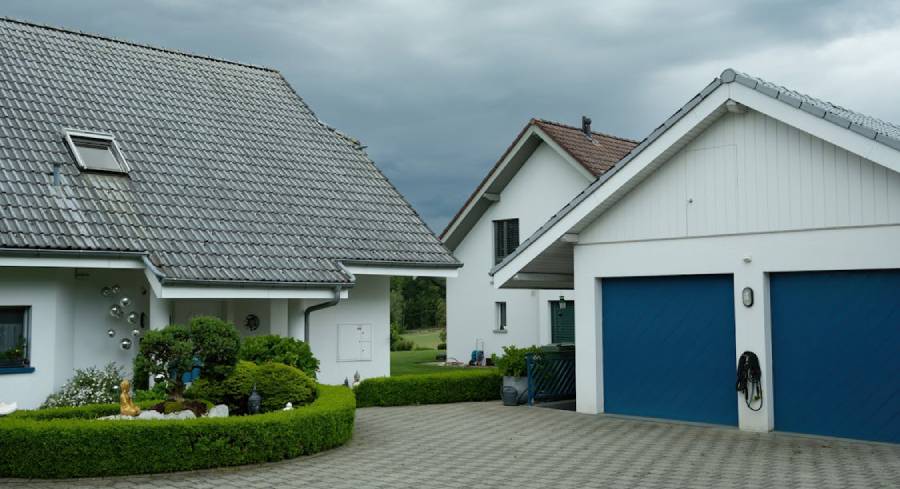
Featured Image Source: https://www.pexels.com/photo/houses-in-village-24524484